Every commercial appraisal lives at the intersection of property facts, market behavior, and professional judgment. In Guelph, Ontario, that intersection adds a few turns of its own. The city’s manufacturing base, a strong university presence, and steady in‑migration influence rents, vacancy, and demand patterns across industrial, office, retail, and mixed‑use assets. Local zoning, development charge regimes, and infrastructure investments shape how appraisers view highest and best use. If you are commissioning, reviewing, or relying on a commercial building appraisal in Guelph, the fastest way to lose time or money is not a single glaring error, it is a handful of small missteps that creep in at the scoping, data, and interpretation stages.
Below are the recurring pitfalls I see when owners, investors, or lenders work with commercial building appraisers in Guelph, Ontario, and how to avoid them with a little preparation and informed pushback.
Treating an appraisal like a commodity
Two appraisals can both be compliant with CUSPAP, the Canadian Uniform Standards of Professional Appraisal Practice, yet vary meaningfully in conclusions because of scope, assumptions, and data depth. I often hear someone say, We need a value for the bank, any firm will do. That usually leads to three problems. The wrong scope, an appraiser with the right credentials but the wrong sector experience, and a report that satisfies a checkbox but not the actual risk question on your desk.
In Guelph’s market, nuances matter. An industrial building with 22‑foot clear height gathers different tenants and rents than one with 14‑foot clear height, even if the square footage matches. A restaurant in a heritage building on Wyndham Street faces very different code and retrofit realities than a vanilla retail box near Stone Road Mall. Commercial appraisal companies in Guelph, Ontario advertise broad services, but you want the individual signing AACI, P.App to have handled assets like yours in the last 12 to 24 months within Wellington County and adjacent markets such as Kitchener, Cambridge, and Milton. Ask for anonymized comp sheets, not just a polished brochure.
Confusing MPAC assessment with market value
MPAC’s Current Value Assessment is built for taxation equity across a province, not for a lender’s loan‑to‑value calculation or a partner buyout. MPAC may lag market rent movements or apply standardized vacancy and cap rate assumptions that diverge from present conditions on the ground. I have seen office suites downtown assessed above what actual leases could support during a soft period, and small‑bay industrial under‑assessed relative to brisk post‑renovation leasing.
A formal commercial property assessment in Guelph, Ontario, when used for investment or lending, must reflect current market parameters: real lease contracts, stabilized vacancy and credit loss, operating costs, and a defendable capitalization rate. Treat the tax assessment as a clue, not as a benchmark.
Underestimating the lease details that drive value
Commercial value is often income‑driven. The devil sits quietly in the lease abstracts.
Consider a 20,000 square foot multi‑tenant industrial building in the east end. On paper, average rent looks like 14 dollars per square foot. Digging into leases, one unit has a six‑month free rent period that just started, another has a tenant improvement allowance amortized by the landlord, and two smaller units are on gross leases where the landlord eats snow removal spikes. Normalize for these, and effective gross income can drop 5 to 10 percent from the headline. If the appraiser misses it, the cap rate gets applied to the wrong number.
The most frequent lease‑related pitfalls include misclassifying net versus semi‑gross or gross leases, ignoring step‑ups and renewal options that cap rent growth, overlooking percentage rent clauses in food and beverage or retail, misallocating expense recoveries for taxes, insurance, and common area maintenance, and failing to treat parking or rooftop antenna income as separate line items. In Guelph, where many owners are long‑term holders who self‑manage, informal side letters and handshake concessions are common. Bring them into the light, or risk a surprise in the valuation.
Misreading stabilized vacancy and downtime
Vacancy is not just a percentage pulled from a brokerage report. It is a judgment about what a typical investor would underwrite in this micro‑location for this asset type and quality. A refurbished brick‑and‑beam office near the river with strong amenities might deserve a different stabilized vacancy rate than a peripheral B‑class office building that relies on surface parking and highway visibility.
Guelph has experienced divergent trends by sector. Small‑bay industrial has seen low physical vacancy and rapid lease‑up, while certain office pockets carry elevated rollover risk. If your appraiser applies a generic 5 percent vacancy and credit loss across the board, ask for sector‑specific support within the city or relevant submarkets. Include realistic lease‑up downtime and leasing costs for any known turnover inside the forecast period, not just a one‑line stabilized allowance.
Letting area measurements slide
Square footage drives rent rolls, cost allocations, and comparable analysis. One error I still encounter arises from mixing sources: MPAC, old drawings, and BOMA measurements. BOMA standards have evolved, and industrial versus office versus retail each have nuances for gross leasable area, structural features, and common area load. A 2 percent discrepancy on a 60,000 square foot property can push value materially, especially when market rents hover within a tight band.
If you suspect measurement issues, authorize the appraiser to conduct or commission a current measurement following the appropriate BOMA standard. The cost is modest compared to the risk of an inflated or depressed income conclusion.
Ignoring deferred maintenance and capital expenditures
Buyers, lenders, and auditors do not value an industrial roof on hope. They look for the last replacement date, roof type, remaining service life, and any warranty documentation. The same applies to HVAC units, parking lots, elevators, and fire protection systems. In Guelph’s freeze‑thaw climate, asphalt and membrane surfaces reveal their age quickly.
Some owners provide a list of recent capital works but skip a ten‑year look‑forward. A good appraiser anticipates near‑term capital needs and adjusts either through a capital cost allowance in direct capitalization or explicitly in a discounted cash flow. If you have a capital plan, share it. If you do not, expect the appraiser to use market‑based reserves that might be more conservative than your experience.
Overlooking environmental red flags
Guelph’s industrial history left scattered contamination risks, from former auto shops to dry cleaners. Even benign uses can sit atop sensitive aquifers or within wellhead protection areas that constrain redevelopment. A Phase I ESA does not appraise the property, but it influences the appraiser’s assumptions about marketability, lender requirements, and highest and best use. I have seen deals stall because a historical tank reference surfaced after the appraisal was complete, resulting in revised extraordinary assumptions and a tighter buyer pool.
If you have a recent Phase I ESA, provide it at engagement. If not, be prepared for the appraiser to insert an extraordinary https://anotepad.com/notes/jr77xass assumption about environmental condition, which can limit certain lenders’ acceptance of the report.
Misclassifying highest and best use for transitional sites
Land and buildings near growing nodes often carry a split identity. A warehouse near a planned transit corridor may perform well today but sit on dirt that commands a premium for mixed‑use or higher density industrial. Commercial land appraisers in Guelph, Ontario look closely at the City’s Official Plan, zoning bylaw, and active secondary plans. They evaluate the economic feasibility of redevelopment, not just legal permissibility.
Where owners stumble is in pushing a pro‑forma that assumes entitlements will arrive on an optimistic schedule or at untested densities. Seasoned appraisers will temper those assumptions with real timelines for site plan approval, servicing capacity, parkland dedication, and development charges. They may value the property under current use, then test for surplus land or redevelopment potential with a probability‑weighted approach. Forcing a single point, future‑state conclusion can overstate value and mislead your financing or exit plans.
Using the wrong cap rate for the real risk
Cap rates do not travel well across asset types, lease structures, and micro‑locations. Guelph’s small‑bay industrial may trade, at times, 50 to 100 basis points tighter than suburban office, with single‑tenant retail sitting somewhere in between depending on covenant and term. A medical office with physician tenants and short‑term leases can exhibit durable occupancy yet still command a higher cap rate because of rollover friction.
You do not need an exact answer on day one, but you do need the right risk lens. Ask your appraiser to detail how tenant quality, remaining lease term, market rent versus contract rent, building quality, and location inform the cap rate. Look for recent, verified sales within Wellington County or adjacent markets with transparent net operating income statements, not just headline numbers. A small change in the cap rate, say from 6.25 to 6.75 percent, can swing value by roughly 7 to 8 percent. Treat it with the gravity it deserves.
Missing heritage and legal non‑conforming status
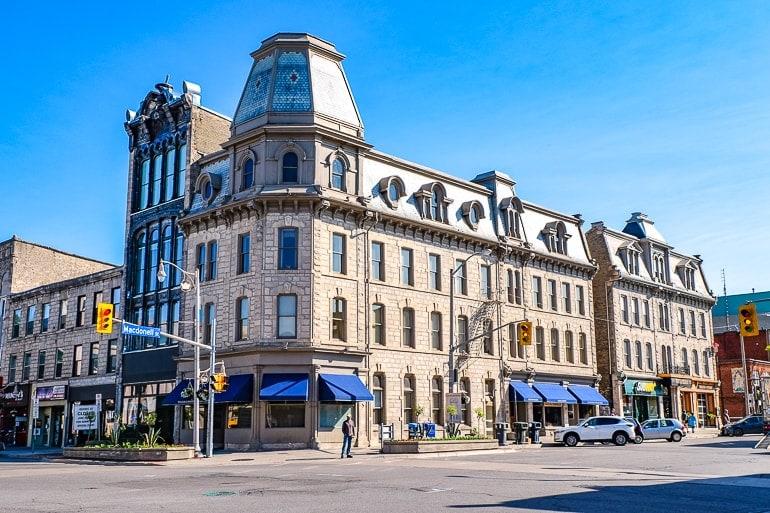
Downtown Guelph showcases beautiful heritage facades that attract tenants and foot traffic. Heritage designation can constrain exterior alterations, signage, and even window replacements. That does not kill value, but it complicates capital planning and timelines, both of which a prudent buyer prices in.
Similarly, a use that predates current zoning may be legal non‑conforming. Its continuation is allowed, but expansion or significant alteration may not be. Appraisers who miss this risk can apply comps from fully conforming assets and overstate both re‑lease potential and future adaptability. Provide any heritage or zoning correspondence at the outset so the analysis aligns with reality.
Treating land as if it appraises like a building
Land valuation follows different rules. Comparable sales need surgical adjustments for frontage, depth, corner influence, servicing status, density permissions, and timing to approvals. In Guelph, whether servicing allocation exists can make or break immediate development potential. Development charges and parkland dedication policies change the economics quickly.
Commercial land appraisers in Guelph, Ontario often employ a residual land value model for complex sites, especially mixed‑use or intensification parcels. They layer realistic hard costs, soft costs, contingencies, profit, and a development timeline supported by local experience. Owners sometimes push for back‑solved values from aggressive pro‑formas. That can be useful as a sensitivity test, but without market‑tested rents and exit cap rates, the number is aspirational, not market value.
Overcomplicating simple properties and oversimplifying complex ones
A single‑tenant industrial condo unit with a fresh five‑year net lease and clean comparables often supports a straightforward direct capitalization approach. A hotel with food and beverage, or a seniors residence with care services, does not. Those assets contain a business component that requires a going‑concern analysis. Lenders know this and will reject a report that lumps everything under real estate. Match the method to the asset. If your property sits anywhere near special‑purpose territory, be explicit at the engagement stage and ensure your appraiser has that specialty.
Forgetting HST, property taxes, and recoveries in cash flow
In Ontario, HST treatment varies by situation and can confuse income analysis. Most commercial rents are plus HST, so the tax is not an expense to the landlord. The issue is recoveries. If your leases say TMI is recoverable but exclude property management fees, your net operating income will trail a typical building with full recovery clauses. Combine that with recent changes to property taxes after a major renovation, and you can be off by tens of thousands annually.
Appraisers must reconcile the recovered and unrecovered line items precisely. Provide breakout schedules for CAM, taxes, insurance, utilities, and management. If tenants are separately metered, note it. If you subsidize utilities for a restaurant’s exhaust and make‑up air, note that too.
Skipping lender‑specific scope requirements
Not all lenders read appraisals the same way. A national bank might require a full narrative report with interior inspection, photos of roof and mechanicals, and a minimum of three sales and three lease comparables, all verified. A private lender might accept a shorter restricted‑use report that still addresses market rent support, environmental assumptions, and a summarized highest and best use.
Commercial appraisal companies in Guelph, Ontario can tailor scope, but only if they get lender requirements up front. Nothing frustrates clients more than paying for a second, longer report because the first one failed a checklist no one shared. If you are refinancing, secure the lender’s appraisal instruction letter and pass it to the appraiser at engagement.
Underestimating timing and access
Appraisals move at the speed of information and access. A well‑organized owner who provides leases, rent roll, operating statements, capital records, building plans, and access to the site for measurement and photos can see a credible draft within 1 to 2 weeks for standard assets. If leases are missing signatures, rent rolls conflict with deposits, or tenant access gets bounced between property managers, that timeline stretches.
In multi‑tenant buildings, schedule site access early and in writing. Tenants often need 24 to 72 hours notice. If sensitive areas exist, such as lab space near the university or secure storage, plan for escorted visits. The more friction at inspection, the higher the chance something material goes undocumented, and the more conservative the appraiser will be on conditions and assumptions.
Two financing narratives that quietly derail value
I have watched two stories repeat often enough to deserve their own spotlight.
First, the value built on a rosy, fully stabilized future, presented to a lender seeking comfort today. A retail plaza with two vacant bays might pencil nicely at 32 dollars per square foot once leased, but until signed leases exist, many lenders will underwrite a longer lease‑up and higher free rent than owners expect. If your appraisal reads like a sales brochure for the future, expect pushback or a haircut.
Second, the value anchored to an old rent that never caught up to market. A family‑owned industrial building might house a related tenant paying 9 dollars net when the market supports 13 to 14 dollars. Some owners assume a buyer will see through this and pay for market potential. Some will, but many will reflect the risk and cost of resetting a related‑party arrangement. Appraisers typically normalize to market rent if a tenant is non‑arm’s length, but documentation matters. Thin support leads to conservative conclusions.
A brief word on comparables and verification
Good data separates strong appraisals from weak ones. Sales comps pulled from a database without verification can mislead. A recent industrial sale at a sharp cap rate looks great until you learn half the building is a sale‑leaseback with a rent bump that pushes above market by year three, supported by the seller’s covenant. Retail leases advertised at 40 dollars gross can hide service charges that effectively move the net rent down to 28 to 30.
When you review a report, look for verification notes. Did the appraiser speak with a party to the transaction, the listing broker, or a property manager with direct knowledge? Does the analysis adjust for atypical conditions, inducements, and non‑market terms? Guelph is a relationship‑driven market. The best commercial building appraisers in Guelph, Ontario invest time in those calls.
Heritage of the deal: communication and assumptions
Assumptions are not a cop‑out when they are explicit, supported, and sensible. If an appraisal relies on an extraordinary assumption that the roof has 10 years of life based on a contractor letter, state it. If the report assumes environmental conditions are typical absent a Phase I ESA, say it clearly. Lenders can work with transparent conditions. Surprises after commitment are another matter.
Early communication solves most issues. When in doubt, over‑share. Floor plans, surveys, easements, encroachments, and right‑of‑way agreements can all affect value. A rear lane that appears public might actually be a private easement with maintenance obligations. A hydro easement can limit expansions. The appraiser will discover or assume those facts. Better to anchor them with documents you provide.
Quick pre‑appraisal checklist for owners and managers
- Current rent roll with lease start and expiry dates, options, area per tenant, and recoveries Executed leases and amendments, including any side letters or inducement agreements Last two years operating statements, plus current year‑to‑date, with a CAM and tax recovery schedule Capital expenditure history for the last five years, and a forward 3 to 5 year capital plan if available Any environmental, building condition, heritage, survey, or zoning documents, plus recent measurements following BOMA
Red flags that trigger extra lender scrutiny
- Single‑tenant exposure with less than three years remaining and no extension negotiated Legal non‑conforming use where zoning curtails future alterations or expansions Environmental history suggesting potential Phase II requirements or monitoring Material vacancy without documented leasing strategy or realistic downtime and costs Unusual related‑party leases at off‑market rents that lack clear paths to normalization
Selecting the right partner in Guelph
Not every firm fits every assignment. Some commercial appraisal companies in Guelph, Ontario maintain deep benches in industrial and retail. Others devote more horsepower to development land and complex mixed‑use. Ask for two things beyond credentials. First, examples of recent assignments similar to yours, with an explanation of the approaches used and why. Second, the firm’s policy on data verification and confidentiality. If you are sharing sensitive rent data, you should know how it will be stored and anonymized when used as confidential comparables.
Fees and timelines matter, but be wary of quotes that slash both. A report delivered in four business days on a multi‑tenant property with limited documentation often signals a template job with light verification. If you need speed, focus on speed of access and completeness of data. That is where timelines usually break.
What good looks like in a Guelph appraisal
When the process runs well, the report reads like a clear, grounded story. It sets the property’s facts, frames the relevant market dynamics in Guelph and comparable submarkets, and explains the logic linking income, costs, and risk to a value conclusion. The sales comparison approach cross‑checks the income approach rather than contradicting it. The direct capitalization method and any discounted cash flow share consistent rent growth, vacancy, and expense assumptions. Highest and best use reads like a reasoned test, not a wish list.
A solid report anticipates the reader’s questions. Why this cap rate range, and how does tenant rollover influence it? How do heritage restrictions change capital planning? What do the verified lease comps say about net rent and inducements today, not last cycle? When extraordinary assumptions are present, they stand out, supported by documents in the addenda.
Final guidance for property types across the city
- Industrial: Clear height, power capacity, loading mix, and yard functionality drive rent. Document them. Shortage of small‑bay space can boost market rent, but turnover costs and free rent still apply. Roof age and parking lot condition carry outsized weight. Office: Tenant demand varies by location and buildout quality. Downtown character space can compete well if upgraded mechanicals and efficient layouts exist. Stabilized vacancy should reflect real rollover and re‑leasing downtime. Do not gloss over inducements. Retail: Visibility, access, co‑tenancy, and signage rights matter. Percentage rent and exclusive use clauses can change income risk. In older strips, capital plans for façade and parking upgrades temper the cap rate. Mixed‑use and heritage: Treat residential and commercial components distinctly for rent and expenses. Heritage constraints require timelines and cost allowances that a prudent buyer would build in. Land: Servicing status, density permissions, and approval timelines separate nominal from real value. Use a residual test where future development drives pricing, but anchor it with market exits and lender‑tested underwriting.
Commercial building appraisal in Guelph, Ontario rewards preparation and precision. Small choices accumulate. Choose an appraiser with the right sector experience. Share complete, organized data. Scrutinize lease economics and measurement standards. Press for market‑verified comparables. And frame the assignment to solve the real risk question at hand. Do these, and you will avoid the most common pitfalls while producing a value conclusion that stands up in the credit room, the boardroom, and, if needed, in court.